Understanding Broadleaf Weeds: Types and Management


Intro
Broadleaf weeds pose a significant challenge to agricultural productivity, often leading to frustrating losses for farmers and cultivators. These weeds, distinct from grasses, exhibit a unique structure and growth pattern that can infiltrate crop fields, competing for nutrients, light, and water. In this article, we aim to unpack the complexities surrounding broadleaf weeds. We'll explore their characteristics and the various types that exist in different ecosystems. Moreover, we will analyze their ecological impact and the management strategies that can be employed to mitigate their effects on agricultural ventures.
With increasing emphasis on sustainable practices in farming, understanding broadleaf weeds becomes vital not only for improving crop yields but also for fostering eco-friendly agricultural methods. This comprehensive guide will delve into the nitty-gritty of broadleaf weeds, revealing how their traits differentiate them from other plant types and why managing them is essential for the health of both ecosystems and farms alike.
Prolusion to Broadleaf Weeds
Broadleaf weeds are more than just unwanted guests in gardens and fields. They challenge farmers by competing for resources like water, nutrients, and sunlight. Understanding broadleaf weeds is crucial for achieving healthy crop yields and maintaining the balance in agricultural ecosystems. This article aims to highlight the characteristics, types, ecological impact, and management strategies associated with these notable plants.
An important consideration is that broadleaf weeds are distinct from grasses, making their identification and management unique. For instance, while grasses possess narrow leaves and fibrous root systems, broadleaf plants showcase a variety of leaf shapes and sizes with more complex roots. Recognizing these differences is pivotal for farmers striving to tailor their management strategies effectively.
Moreover, broadleaf weeds can serve beneficial roles. They contribute to soil health by improving its structure and encourage biodiversity by providing habitat for various species. Nonetheless, their unchecked growth can drastically affect crop production, drawing farmers into a tug-of-war with nature. Addressing this challenge warrants an in-depth examination of broadleaf weed management, which encompasses not only removal techniques but also methods to prevent infestations from taking root in the first place.
“A good plan today is better than a perfect plan tomorrow.” – This adage emphasizes the need for timely action when dealing with broadleaf weeds.
The stakes are high, and the path to effective crop management hinges on understanding the nuances of broadleaf weeds. By diving into their defining features and types, as well as exploring their ecological ramifications, farmers and agricultural enthusiasts will be empowered to make informed decisions regarding sustainable practices. As we move through this discussion, the aim is to equip all readers with the knowledge necessary to combat the challenges posed by these robust plants.
Characteristics of Broadleaf Weeds
Broadleaf weeds possess unique traits that clearly differentiate them from the more commonly recognized grasses. Recognizing these characteristics is crucial for effective management in agricultural and ecological settings. By understanding their morphological and physiological features, farmers can devise tailored strategies for control, leading to improved crop yields and healthier ecosystems.
Morphological Features
Leaf Structure
The leaf structure of broadleaf weeds is among their most prominent features. Unlike grass, which often has narrow leaves, many broadleaf plants showcase wide, flat foliage, creating a larger surface area for photosynthesis. This characteristic actively contributes to their vigorous growth.
One notable advantage of broadleaf leaves is their ability to capture sunlight more efficiently, allowing for rapid energy production. However, this can also lead to competition with crops for light, making them quite a challenge in farming contexts.
A unique feature of many broadleaf leaves is their diverse shapes, ranging from heart-shaped to lobed. This adaptability aids in their survival across various environmental conditions. Unfortunately, this diversity can complicate identification, making control efforts more challenging.
Stem Characteristics
Stem characteristics vary widely among broadleaf weeds, but many share a common trait: a thicker, more robust structure compared to grasses. This sturdiness allows them to withstand harsher conditions and often facilitates easy access to resources like light and nutrients.
For example, dandelions have thick, taproot-like stems that can store nutrients, enabling them to thrive in poor soil conditions. One downside here is that their resilience can lead to a cascade effect in ecosystems, sometimes overshadowing native flora and disrupting local habitats.
Another unique aspect is the hollow stems found in species like milkweed. This can provide structural support while also serving as a habitat for various insects. The challenge remains—while they contribute to biodiversity, these features can also assist in their survival against control methods.
Root Systems
The root systems of broadleaf weeds are often diverse and complex, a significant factor influencing their persistence. Many species develop deep taproots, such as the common dandelion, which allows them to access moisture and nutrients deep in the soil. This characteristic can be particularly advantageous in drought conditions, enabling these weeds to outlast many desirable crop plants.
Additionally, some broadleaf weeds have fibrous root systems, allowing for rapid colonization and nutrient uptake from the surface soil. For example, chickweed spreads quickly through shallow root networks, making it a formidable competitor in gardens and fields.
However, the deep root systems can pose a disadvantage for agricultural practices that rely on tillage. Disturbing these roots may lead to an explosion of new growth, as many broadleaf species can reproduce vegetatively, enhancing their spread and making management efforts more convoluted.
Physiological Characteristics
Photosynthesis
The photosynthetic processes in broadleaf weeds are notably efficient. Utilizing the C3 pathway, these plants thrive in cooler, wetter environments, producing energy effectively during spring and fall. This gives them a seasonal advantage, allowing them to establish themselves before crops can fully mature.
The broad leaf structure, leveraged for maximum sunlight absorption, supports a robust photosynthesis rate. However, this efficiency can lead to extensive growth quickly, which can pose significant challenges for farmers as they compete for crucial resources like water and nutrients.
Growth Patterns
Broadleaf weeds often exhibit a rapid and aggressive growth pattern. This feature manifests in their ability to exploit gaps in canopy cover or disturbed soils, leading to rapid colonization. Annual species, for instance, germinate, grow, and set seed within one season, making them a persistent threat in agricultural settings.
Interestingly, their growth rates can be affected by environmental factors such as temperature and moisture, leading to varied heights and densities. This adaptability can be a double-edged sword—while it allows them to thrive under varying conditions, it complicates management efforts, as what works for one species may not apply to another.
Reproductive Systems
The reproductive systems of broadleaf weeds further underscore their resilience and competitive nature. Many species are prolific seed producers, with some capable of generating thousands of seeds per plant, which can lead to rapid population increases.
Moreover, they often employ various reproductive strategies, including both sexual reproduction through seed production and asexual methods like vegetative propagation. This flexibility ensures that even if some plants are destroyed, the species persists through its numerous seeds or vegetative parts.
The unique aspect here is that many broadleaf weeds can germinate under a wide range of conditions. This allows them to take advantage of different seasons or openings in agricultural settings, which can complicate control efforts substantially.
Understanding the characteristics of broadleaf weeds is essential for developing effective management strategies, ultimately ensuring the health of crops and the ecosystem.
Types of Broadleaf Weeds
Understanding the various types of broadleaf weeds is essential for effective management in agriculture. Each type comes with its unique characteristics, growth patterns, and implications for crop production. Recognizing these differences can significantly influence management strategies and impact overall agricultural health, productivity, and soil quality. Broadleaf weeds can be classified primarily into three categories: annual, perennial, and biennial weeds. By diving into each type, one can gain a clearer picture of their behavior and ecological implications.
Annual Broadleaf Weeds


Annual broadleaf weeds complete their life cycle within a single growing season. This rapid lifecycle makes them particularly problematic in crops as they can quickly establish and outcompete desired plants.
Common Species
In the realm of annual broadleaf weeds, some common species include Amaranthus retroflexus (redroot pigweed) and Chenopodium album (lambsquarters). These species are known for their adaptability to various environments, being able to grow in poor soil conditions and under stressful weather. Their fast growth allows them to produce a significant biomass quickly, thereby vying for sunlight, moisture, and nutrients – key resources needed by crops. Their resilience often turns them into a headache for farmers striving to maintain healthy yields.
Key aspects to consider are:
- Adaptability: Many species can thrive in less than ideal conditions.
- Aggressiveness: Their rapid growth enables these weeds to seize resources before crops can.
However, the downside is their ability to establish extensive roots, making manual removal arduous and often ineffective.
Growth Cycle
The growth cycle of annual broadleaf weeds is characterized by swift germination, rapid growth, flowering, and dying off in one season. This cycle can profoundly affect crop management strategies. For example, Amaranthus typically germinates in spring, grows through summer, and can produce thousands of seeds before frost hits. Understanding this cycle is vital for timing interventions, such as targeted herbicide applications.
Consider these points:
- Short-lived: They persist only for one growing season, making weed management routine yet necessary.
- Seed Production: Their capacity to produce vast amounts of seed increases their population size rapidly.
Tracking their growth cycles allows farmers to anticipate challenges and adjust their management practices accordingly.
Reproduction
Annual broadleaf weeds primarily reproduce by seeds, with some capable of vegetative reproduction. This prolific seed production can see one plant generating over a hundred thousand seeds in favorable conditions. Each seed can remain dormant in the soil for years, waiting for the right condition to germinate.
This characteristic makes it critical for farmers to implement control measures before these plants flower. Some farmers adopt integrated pest management practices combining mechanical and chemical methods to mitigate seed bank issues, targeting these weeds before they can set seed.
- Prolific Seeders: Their reproduction method encourages rapid growth in broadleaf populations.
- Dormancy: Seeds can lie in wait, leading to future infestations even after control.
Perennial Broadleaf Weeds
Perennial broadleaf weeds live longer than one growing season and can sometimes be more challenging to manage due to their established root systems, allowing them to withstand adverse conditions.
Identification
Identifying perennial broadleaf weeds is crucial since their appearance can often be confused with desirable plants or annual weeds. Common species like Cirsium arvense (Canada thistle) and Taraxacum officinale (dandelion) are perennial nuisance plants characterized by their deep and extensive roots. These root systems allow them to absorb water and nutrients from deeper soil layers, thus surviving drought conditions and affording them a competitive edge.
Important features to recognize:
- Growth Form: Many perennials exhibit rosette growth forms which can mimic crops.
- Deep Roots: Their ability to access soil moisture makes them persistent adversaries in cultivated fields.
Failing to identify these weeds can lead to ineffective management efforts.
Survival Mechanisms
Perennial broadleaf weeds possess remarkable survival mechanisms, such as extensive root systems and vegetative propagation. They often have a strategic growth pattern that allows them to store energy in their roots, enabling them to recover even after several cutting or environmental stresses. A good example is Cirsium arvense, which can regenerate from a tiny piece of root left in the soil.
Key considerations include:
- Energy Storage: Allows them to spring back after control efforts.
- Reproduction: Many perennial weeds can spread via underground rhizomes, complicating management efforts.
These features make perennial weeds especially resilient but provide opportunities for targeted strategies that may exploit their weaknesses.
Control Challenges
Controlling perennial broadleaf weeds poses a distinct set of challenges, often because of their ability to regrow from roots or rhizomes. For instance, Taraxacum officinale can do quite a number on fields if not managed properly, often requiring repeated interventions over several seasons for effective control.
- Regrowth: Their regrowth potential requires a multi-faceted approach involving mechanical, cultural, and chemical methods.
- Resistance: Over-reliance on chemical controls can lead to herbicide resistance, making management much tougher in the long run.
These challenges underline the necessity for farmers to adopt an integrated management approach tailored to their specific contexts.
Biennial Broadleaf Weeds
Biennial broadleaf weeds have a two-year life cycle, which can complicate timely management strategies.
Life Cycle Context
The life cycle of biennial broadleaf weeds typically involves a period of vegetative growth during the first year, followed by flowering and seed production in the second. Species like Daucus carota (wild carrot) exemplify this pattern, as they establish in the first year and reach reproductive maturity the next. This slow buildup allows them to evade typical annual weed management strategies. Understanding their life cycle can lead to more informed timing of control measures, especially between their first and second year.
Key features include:
- Delayed Reproduction: Their reproductive phase can catch farmers off-guard.
- Overwintering: They can survive winter conditions in their vegetative form, ready to flower in spring.
Strategic interventions just before they reach reproductive maturity can effectively reduce their population.
Management Techniques


Effective management of biennial broadleaf weeds often involves a combination of cultural practices and herbicide applications. Since biennials can be confused with desirable crops early in their life cycle, information on optimal treatment timing is critical. Practices might involve targeted mowing before they set seed and the development of robust cropping systems that outcompete these weeds.
Considerations include:
- Cultural Practices: Crop rotation and cover cropping can reduce weed establishment.
- Timing of Control: Implementing interventions in their initial year can prevent them from persisting into the second year.
By understanding their lifecycle and adopting proactive management techniques, farmers can mitigate the risks posed by biennial weeds in agricultural systems.
Ecological Impact of Broadleaf Weeds
Broadleaf weeds play a significant yet often underappreciated role within natural and agricultural ecosystems. Understanding their ecological impact is crucial for effective management and improving overall crop productivity. The presence of these weeds can influence plant communities, alter soil properties, and even affect pest dynamics. Acknowledging their multifaceted roles helps in developing comprehensive management strategies.
Role in Ecosystems
Biodiversity Contributions
Broadleaf weeds contribute richly to biodiversity in various ways. They offer shelter and food for numerous insects, birds, and small mammals. This diversity can improve the resilience of ecosystems, making them more robust against environmental fluctuations. The existence of diverse plant species creates habitats for different critters, establishing a balanced food web.
Interestingly, broadleaf weeds can also attract beneficial insects. For instance, flowering weeds may draw in pollinators, assisting in crop pollination. This characteristic makes them not just pests, but integral parts of a healthy ecosystem. However, if left unchecked, their overabundance can lead to monoculture scenarios that diminish overall diversity.
Nutrient Cycling
Broadleaf weeds contribute to nutrient cycling, enriching soils in a myriad of ways. These plants are often deep-rooted, allowing them to tap into nutrients unavailable to shallow-rooted crops. When broadleaf weeds die back or are incorporated into the soil, they return nutrients like nitrogen or phosphorus, supporting crop growth.
Their decay process, however, can be a double-edged sword. Too many weeds can consume vital resources such as moisture and nutrients, competing directly with crops. Thus, while they provide essential contributions to nutrient dynamics, managing their proliferation is essential to maintain a balance.
Soil Erosion and Sediment Control
Broadleaf weeds can play a significant role in preventing soil erosion. Their root systems help stabilize the soil, reducing the risk of erosion during heavy rains. This stabilizing effect also minimizes sediment runoff into water bodies, protecting local aquatic ecosystems.
However, excessive population of certain broadleaf weeds may lead to unfavorable conditions for desirable crops. The early development phases of these weeds can cover soil surfaces so densely that they exclude crop seedlings from light. This aspect makes the control of certain broadleaf species, such as thistles or dandelions, a task of significant importance.
Consequences of Infestation
As much as broadleaf weeds have positive roles in ecosystems, their infestation can bring dire consequences to agricultural practices.
Competitive Dynamics with Crops
Broadleaf weeds engage in competitive dynamics which can be detrimental to crop health. They often compete aggressively for sunlight, water, and nutrients. This intense competition can lead to reduced crop yields, negatively impacting farmers’ profits.
Certain species, like lambsquarters or pigweed, grow rapidly, outpacing slower-growing crops. Their ability to adapt and thrive can create significant challenges for crop management. Farmers must develop integrated strategies to manage these competing dynamics effectively, ensuring crop viability.
Pest and Disease Hosts
Broadleaf weeds often act as hosts for a range of pests and diseases, complicating agricultural practices. They can harbor insects that might later move to crops, bringing challenges of aphid or beetle infestations. Furthermore, some weeds may be reservoirs for diseases that impact surrounding crops.
Recognizing these roles is key for farmers who aim to maintain healthy crop systems. The presence of certain broadleaf weeds should signal potential issues in pest management strategies, demanding a more vigilant approach to monitoring and controlling broadleaf populations.
In sum, while broadleaf weeds can contribute positively to ecosystems, their management must consider both their beneficial aspects and the challenges they pose to agriculture. Proper understanding of these dynamics is vital for farmers looking to enhance sustainability while minimizing potential drawbacks.
Management Strategies for Broadleaf Weeds
Managing broadleaf weeds is crucial for ensuring healthy crop yields and maintaining sustainable agriculture. The techniques employed can drastically influence both immediate and long-term agricultural outcomes. Each strategy aims to reduce weed presence while promoting the growth of desirable plants. It’s not just about killing weeds; it’s about creating a balanced ecosystem where crops thrive and unwanted plants struggle to compete.
Cultural Control Methods
Cultural practices set the foundation for effective weed management. They employ agronomic techniques to create unfavorable conditions for weeds while fostering an ideal environment for crops.
Crop Rotation
Crop rotation involves alternating the types of crops grown in a field over seasons. This method has a unique edge: it disrupts the life cycles of weeds and pests. Different crops generally have varying nutrient needs and growth habits, making it harder for opportunistic weeds to adapt. It also helps in nutrient management, as some crops can replenish soil fertility while others may deplete it. However, one downside to crop rotation is that it requires careful planning and understanding of your land's capabilities. If not executed well, it might not yield the intended benefits.
Cover Cropping
Cover cropping is another cultural method that has gained popularity. Here, crops are planted between main cash crops to cover the soil. This practice can dramatically reduce soil erosion and improve soil health. Quickly-growing cover crops can choke out weeds by outcompeting them for light and nutrients. The major challenge lies in the initial costs and the labor that comes with managing these cover crops. If not handled properly, they might also compete too much with your main crops, leading to decreased yields.
Proper Timing of Planting and Harvesting
Timing is often considered the unsung hero of effective weed management. By planting crops at the right time, farmers can outpace weed growth. For example, early planting can help ensure that the main crops establish themselves before weeds get the chance to take root. Similarly, harvesting at just the right time can prevent weeds from producing seeds, curbing future infestations. However, weather conditions can be unpredictable, which makes timing a bit tricky to master. There’s always a risk of losing out on the perfect window due to late frosts or unexpected rains.
Mechanical Control Techniques
Mechanical control methods provide physical tools to combat broadleaf weeds. These techniques can be very effective but often require consistent management to be successful.
Tillage Practices
Tillage is one of the most traditional forms of weed control. By turning the soil, it disturbs weed roots and can reduce their numbers significantly. This method can be very effective for annual weeds that germinate at the soil surface. However, it carries the risk of damaging the soil structure, and over-tilling can lead to increased erosion. Moreover, relying too heavily on tillage may lead to increased resilience among certain weed species.

Hand Weeding
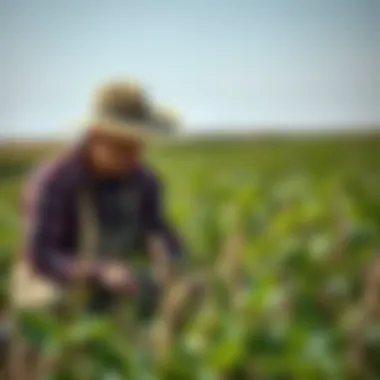
Hand weeding offers precise control over weeds, allowing farmers to selectively remove unwanted plants without harming crops. While this old-fashioned method is labor-intensive, it's particularly useful for organic growers or small-scale farms where precision is key. Unfortunately, this approach is not sustainable for large operations, as the required manpower can make it economically unfeasible.
Mowing Strategies
Implementing a mowing strategy can be effective in managing broadleaf weeds, especially in their early growth stages. Regular mowing can prevent weeds from flowering and setting seed, thus reducing future weed populations. It essentially keeps weeds in check and allows for better crop competition. The downside is that relying solely on mowing may not fully eradicate weeds, as the root systems can remain intact, leading to regrowth.
Chemical Control Considerations
Chemical control remains a vital part of weed management for many farmers, ensuring a proactive approach to dealing with pervasive weed populations.
Herbicide Options
Herbicides provide a wide range of options for controlling broadleaf weeds. Selective herbicides target specific weed types while leaving desirable crops unharmed. This specificity means that farmers can effectively tackle problematic weeds without endangering their crops. However, the downside is the potential for chemical resistance, which can develop if herbicides are not rotated properly.
Application Techniques
How and when herbicides are applied matter significantly. Proper application techniques enhance effectiveness and minimize environmental impact. Techniques such as aerial spraying can cover large areas quickly, but they require careful planning to avoid drift onto non-target plants. There’s a growing concern around the usage of chemical controls, as they sometimes lead to unintended ecological consequences.
Resistance Management
Resistance management is becoming increasingly important. Weeds can adapt over time, leading to genetic changes that make them resistant to certain herbicides. This highlights the need for ongoing management practices that integrate both chemical and non-chemical methods. Although developing a resistance management plan can be time-consuming, it's essential for ensuring long-term control of broadleaf weeds.
In summary, managing broadleaf weeds requires an integrated approach. By combining cultural, mechanical, and chemical strategies, farmers can build a more resilient agricultural ecosystem.
Each method has its advantages and unique features; choosing the right combination is key to sustainable weed management.
Integrated Weed Management Approaches
Integrated Weed Management (IWM) is an essential framework that brings together various control techniques to tackle broadleaf weeds effectively. The need for such an approach is driven by the complexity of weed biology, their adaptability, and the ever-increasing resistance to herbicides. Relying solely on one method often leads to diminishing returns and can exacerbate the problem. This section discusses why integration is advantageous and explores practical methods for farmers and enthusiasts alike.
Combining Methods for Efficacy
Benefits of Integration
The core idea behind integrating different weed management methods is to create a synergy between cultural, mechanical, and chemical controls. Each method has its strengths and weaknesses, yet when combined, they complement one another effectively. For example, employing crop rotation alongside herbicide application can disrupt weed life cycles and reduce their overall population. This holistic approach not only improves weed control but also minimizes negative environmental impacts, fostering healthier ecosystems.
One unique characteristic of integration is its potential for long-term sustainability. Rather than just putting out fires, this strategy aims to prevent them from igniting in the first place. Farmers are increasingly finding that a mixed approach not only helps manage weeds but also enhances soil health and boosts crop yields over time. In an era where sustainability is becoming non-negotiable, the benefits of integration can’t be overstated.
Case Studies and Examples
To truly understand the potency of Integrated Weed Management, examining case studies can provide tangible evidence of success. Numerous agricultural fields that have adopted IWM have reported significant reductions in broadleaf weed populations. For instance, a farm in the Midwest implemented an IWM approach involving cover cropping and selective herbicide application. They noted over a 60% decrease in problematic weed species over three growing seasons. The key characteristic of this example is the adaptability; what works for one type of farm may not be suitable for another, thus we see the need for customization in these approaches.
Another unique feature of IWM is its ability to counteract the issue of herbicide resistance. A case study from a soybean farm illustrates how rotating different herbicides and incorporating mechanical methods helped manage resistant weed populations more efficiently. While the initial implementation required some adjustments in farming practices, the long-term advantages proved beneficial, with an increase in soybean yields and a healthier soil ecosystem.
Indeed, the integrating of various methods within weed management is the golden key. It not just keeps weeds at bay but also crafts a more resilient agricultural system overall.
Future Directions in Broadleaf Weed Research
As agriculture faces ongoing challenges from climate change, invasive species, and diminishing arable land, exploring future directions in broadleaf weed research becomes paramount. This section dives into the innovative approaches that are carving a path toward more effective weed management while enhancing crop yields and sustainability. The significance of embracing these future research avenues lies not just in combating broadleaf weeds, but also in promoting biodiversity and soil health across farming landscapes.
Innovations in Weed Control
Technological Advances
Technological advances in weed control represent a significant leap forward in how farmers can approach the issue of broadleaf weed management. One of the key characteristics of this innovation is the integration of precision agriculture tools. These tools enable farmers to monitor weed populations with high accuracy using drones and remote sensing technology.
The unique feature of such an approach is its ability to apply herbicides selectively. Instead of blanket spraying, farmers can target specific weed infestations, which reduces chemical use and minimizes environmental impact. While these technologies can be more expensive upfront, the long-term savings and better crop yields usually outweigh the cost. Plus, the reduction in chemical application helps in developing sustainable practices, aligning with broader environmental goals.
Biological Control Strategies
Biological control strategies offer another pathway forward in weed management. This method employs natural predators or pathogens to keep broadleaf weed populations in check. The most appealing feature of biological control is its sustainability—it harnesses ecological balance rather than relying solely on chemical interventions.
For instance, introducing specific insects that feed on invasive broadleaf weeds can naturally limit their growth. However, the downside is the time needed for establishing these biological agents and the initial research required to identify effective organisms. Despite these challenges, this strategy holds the potential for long-term and cost-effective weed management, promoting an ecological equilibrium on farms.
Sustainable Practices
Sustainable practices are increasingly recognized as a cornerstone in future weed management research. These practices include crop rotation, cover cropping, and integrated pest management strategies, aimed at fostering healthy farm ecosystems. One of the key characteristics of sustainable practices is their focus on maintaining soil fertility and promoting biodiversity.
The unique feature of such sustainable strategies is that they not only help control broadleaf weed growth but also enhance the resilience of crops against pests and climatic stressors. Nonetheless, while the upfront adoption of these practices may require more planning and adjustment for farmers, the long-term benefits in soil health, reduced chemical dependence, and improved crop diversity are substantial.
"By leveraging innovations in weed control and sustainable practices, farmers can not only combat broadleaf weeds effectively but also contribute positively to the environment."
Finale
As we draw our exploration of broadleaf weeds to a close, it's vital to understand the significant role these plants play in both agricultural ecosystems and natural environments. By recognizing the unique characteristics and types of broadleaf weeds, we can make informed decisions on how to manage them effectively. The insights gained from this study not only enhance our agronomic knowledge but also contribute to sustainable farming practices.
Broadleaf weeds, with their diverse forms and growth patterns, can be either a bane or a boon, depending on how we handle them. Farmers who grasp the essentials outlined in this article will be better equipped to tackle infestations without resorting to destructive measures. For instance, adopting integrated weed management strategies proves beneficial in maintaining crop health while minimizing environmental disturbances.
Recap of Key Points
- Broadleaf weeds exhibit distinct morphological features and physiological traits, setting them apart from grasses.
- There are various types of broadleaf weeds, including annual, perennial, and biennial species, each requiring tailored management approaches.
- Understanding the ecological impact of these weeds helps in strategizing effective removal or control, ensuring the sustainability of agricultural practices.
- Cultural, mechanical, and chemical control methods offer practical solutions to mitigate the challenges posed by these plants.
- Future research directions hint at innovative technologies and biological control methods that can revolutionize weed management in agriculture.
"Knowledge of broadleaf weeds is not just academic; it is a vital component of effective crop management and sustainability."